
Cannabis & Recovery: A New Conversation
Exploring the intersection of healing, addiction recovery, and conscious cannabis use.
For decades, recovery conversations have centered on abstinence from all substances.
While that path saves many lives, a growing number of people are exploring more nuanced relationships with substances — including cannabis.
This page exists to create space for thoughtful, stigma-free conversations about what healing and recovery can look like.
Recovery is a spectrum—and where it intersects with cannabis is where I, and countless others, have found the greatest healing. I believe the sooner this becomes accepted in the mainstream, the fewer lives we will lose to addiction.
— Melissa Story
Co-Creator/CEO MECAHYEH
Cannabis & Recovery: 5 Things to Know
Abstinence and Recovery Are Not the Same Thing
1.
One of the most important—and most misunderstood—ideas in the field of addiction is this: abstinence and recovery do not mean the same thing.
Abstinence means not using a substance. Recovery is broader. It is about building a life of health, wholeness, and self-determination. It’s about how someone is living, not just what they are or are not using.
For many people, abstinence is a meaningful and essential part of recovery. But it is not the only way people move toward healing.
When we define recovery too narrowly, we unintentionally close the door on people who might otherwise begin the process. For someone in the depths of addiction, the leap from active use to complete abstinence can feel overwhelming—sometimes impossible. When that leap is presented as the only option, many people don’t even try.
And those are the people we risk losing.
This is not a new tension within the field. Recovery has always evolved in response to real human experience. Definitions have expanded as new approaches—like harm reduction and medication-assisted treatment—have proven their value over time. The conversation around cannabis and recovery belongs within that same evolution.
At its core, recovery is not defined by a single behavior. It is defined by whether a person’s life is becoming more stable, more connected, more aligned.
A more useful question than “Are they abstinent?” is:
Is their life getting bigger or smaller?
Are they showing up?
Are they growing?
Recovery has always been bigger than abstinence. This conversation simply asks us to recognize that more fully.
Cannabis Is Already Part of Recovery — We’re Just Not Talking About It
2.
Whether or not it’s openly acknowledged, cannabis is already part of many people’s recovery experience.
People are using it to sleep, to manage anxiety, to regulate their nervous systems, to create distance from substances that once caused significant harm.
And many of those people are doing it quietly or secretly. Not because they don’t take recovery seriously—but because they do. They understand the weight of the word “recovery,” and they don’t want to risk losing their place within it. So instead of bringing these choices into the open, they carry them alone. That silence has consequences.
When people can’t speak honestly about their experience, they can’t get support. They can’t ask important questions about intention, impact, or boundaries. They are left to navigate something complex without guidance. And that is where risk increases—not necessarily because of cannabis itself, but because of the absence of conversation and connection.
There is also an important distinction that often gets lost. Not all substance use is driven by the same intention. For many, addiction is about escape—about numbing or leaving a life that feels overwhelming. But what we hear from many people using cannabis in recovery is something different. They aren’t using it to check out—on the contrary—they are using it to help them stay present in their own lives.
For some, cannabis creates just enough space to regulate, to pause, and to make different choices. To remain connected. To not return to patterns that once caused harm.
This doesn’t mean it’s without risk. And it doesn’t mean it’s right for everyone.
But it does mean the conversation needs to be more nuanced than it has been. Because the reality is already here. The question is whether we are willing to talk about it honestly.
The Science Is More Promising Than We've Been Told
3.
For decades, the public understanding of cannabis was shaped less by research and more by restriction.
As a Schedule I substance, cannabis is classified as having no accepted medical use and a high potential for abuse. That classification has made research extremely difficult, and as a result, much of the conversation was driven by assumption and stigma rather than evidence. That is beginning to change.
While the science is still developing—and we continue to wait for cannabis to be rescheduled— some emerging research is pointing to areas that are highly relevant to recovery.
Some studies have explored cannabis as a substitute for alcohol, with individuals reporting fewer negative side effects and improved overall functioning.
Other research has looked at cannabinoids in the context of withdrawal—particularly symptoms like anxiety, insomnia, and agitation, which are some of the most common drivers of relapse.
There is also growing interest in how cannabinoids may interact with trauma-related conditions, including PTSD, by helping regulate the brain’s fear response.
And importantly, the human body already contains a system designed to interact with cannabinoids: the endocannabinoid system. This system plays a role in regulating mood, stress, sleep, and pain—all areas that are often disrupted in addiction and recovery. So cannabis isn’t introducing something foreign into the body—it’s interacting with something that’s already there. For some people, that interaction creates just enough regulation to come back into themselves.
We need more research, more data, and more long-term studies. But there is a meaningful difference between saying “we don’t yet fully understand this” and saying “this has no value.”
Stigma Is a Public Health Risk
4.
Stigma is often framed as a social issue, but in the context of recovery, it is also a public health issue.
Most people in recovery are already navigating stigma related to addiction. There is a persistent cultural narrative that frames addiction as a moral failing rather than a complex health condition.
When cannabis enters the picture, an additional layer of stigma can emerge—sometimes from within recovery communities themselves. People may be told they are not truly in recovery. That they are doing it wrong. That their progress no longer counts. This creates a form of double stigma that can be deeply isolating. And isolation is one of the most significant risk factors in recovery.
When people feel they cannot speak openly about their experiences, they begin to filter themselves. They withhold information. They disconnect. And in doing so, they lose access to the very thing that supports recovery most effectively: connection.
Stigma prevents conversation. And when conversation is shut down, we lose the ability to understand what is actually happening. We lose insight, we lose data, and we lose the opportunity to support people in real and meaningful ways.
Reducing stigma does not require agreement—it requires openness. It requires a willingness to listen without immediate judgment, and to remain curious when someone’s path looks different from what we expect.
Because when someone feels safe enough to tell the truth about their experience and is truly met where they are, that moment has the potential to be transformative.
The Recovery-Conscious Consumer is Already Here
5.
There is a noticeable shift happening in how people are relating to cannabis.
For many, it is becoming less about casual use and more about intentional use. This is especially true for a growing number of people in recovery.
These individuals are not approaching cannabis impulsively. They are engaging with it thoughtfully, often with a clear awareness of their history, their needs, and their boundaries.
Their relationship to cannabis tends to be more deliberate. They pay attention to dosage, timing, and effect. They notice not only how something feels in the moment, but how it impacts them over time. They are often interested in product quality, sourcing, and consistency.
They are not just asking whether something feels good—they are asking whether it supports the life they are trying to build. This reflects a broader shift toward more conscious, intentional consumption. Not as a niche—but as part of a broader shift toward more conscious, intentional use.
And that matters—because this isn’t just a different kind of consumer—it’s a different kind of relationship to cannabis. One that’s shaped by awareness, by intention, by a real understanding of what’s at stake. And as that relationship becomes more visible, more understood—it doesn’t just change how people use cannabis–it has the power to reshape how this plant is understood, used, and trusted.
This content is for educational purposes only and is not medical advice. If you or someone you love is navigating recovery, please consult a qualified healthcare provider, or visit our Resources page.
How has cannabis supported your healing or recovery?
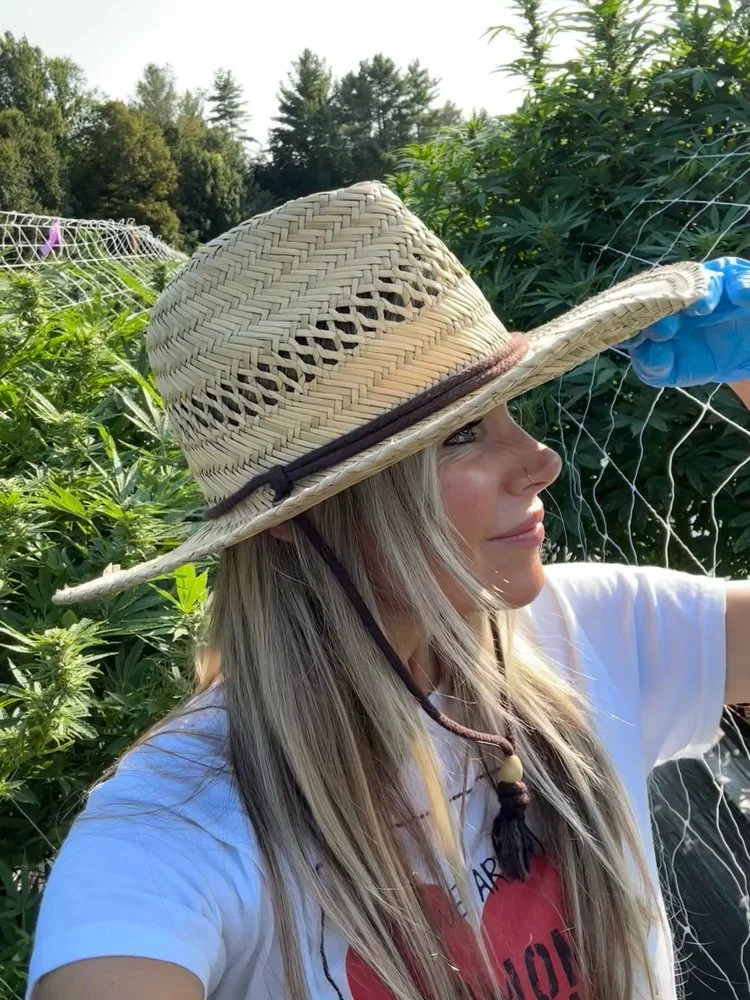
Meet Melissa
Melissa Story is the founder of Mechayeh and a longtime recovery advocate who spent more than a decade working in addiction recovery before entering the cannabis industry. Her work explores the intersection of healing, consciousness, and cannabis.
Consierge Service:
Are you interested in learning more about navigating your relationship with cannabis? Whether you are new to cannabis, returning after a long pause, in recovery, or just canna-curious, Melissa will answer all of your questions and guide you at any level. Email her to set up a discovery call.
